- Doprava a platba
- Veľkoobchod
- Pri nákupe za 55 € máte dopravu ZADARMO

Keyboard Stands are essential accessories for keyboards, digital pianos, and other keyboard instruments. A well-chosen stand can adjust the instrument to an appropriate height, enhance player comfort, and ensure a stable placement of the instrument.
When choosing a stand, one should not only consider its aesthetics, but also its load-bearing capacity, width, stability, adjustable height, and compatibility with specific keyboard instruments.
Before purchasing, verify the dimensions and weight of your instrument. The stand should have sufficient bearing capacity and should securely hold the keyboard without causing the instrument to overhang or become unstable.
If you are moving the stand often, a foldable construction is practical. If the instrument stays in one place, a more robust model with enhanced stability may be more appropriate.
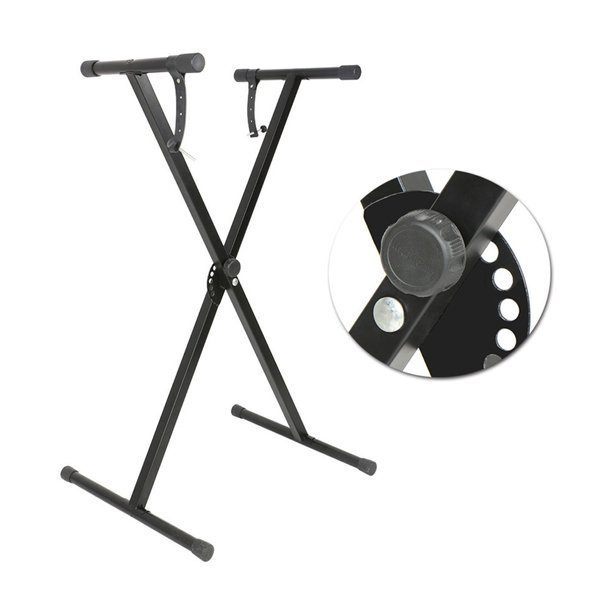
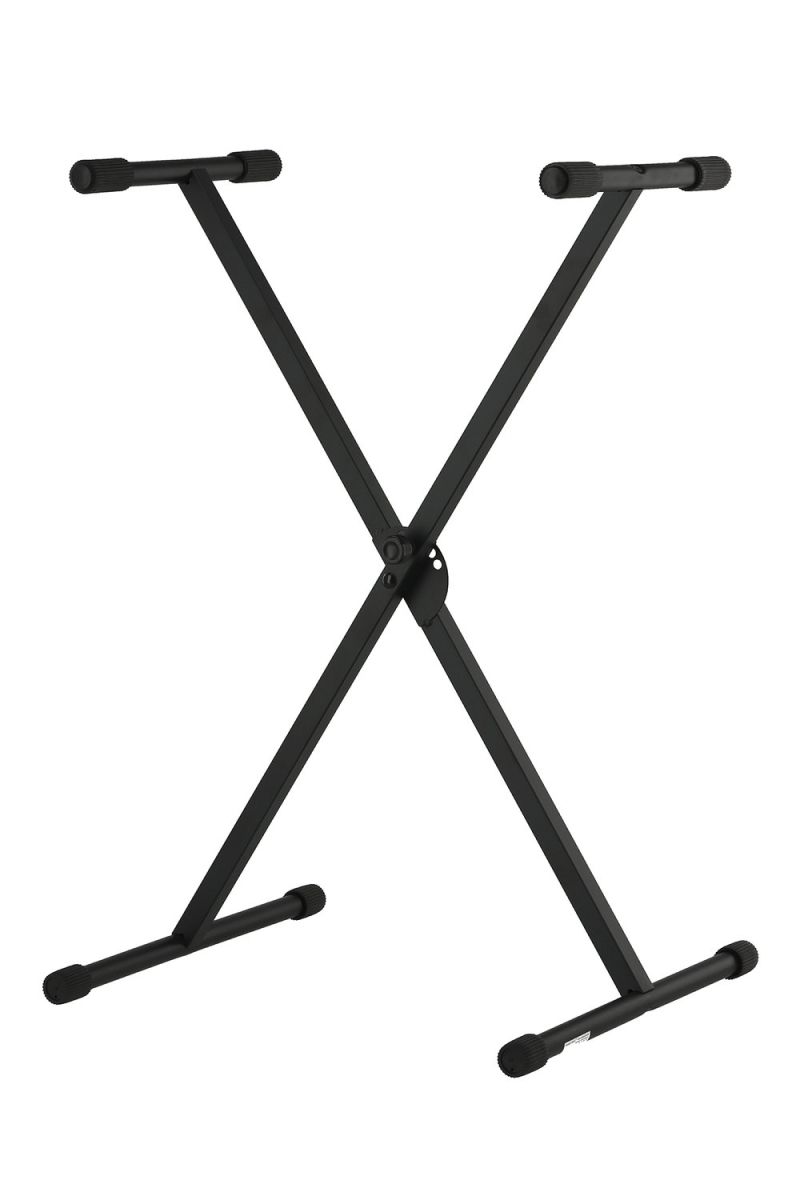
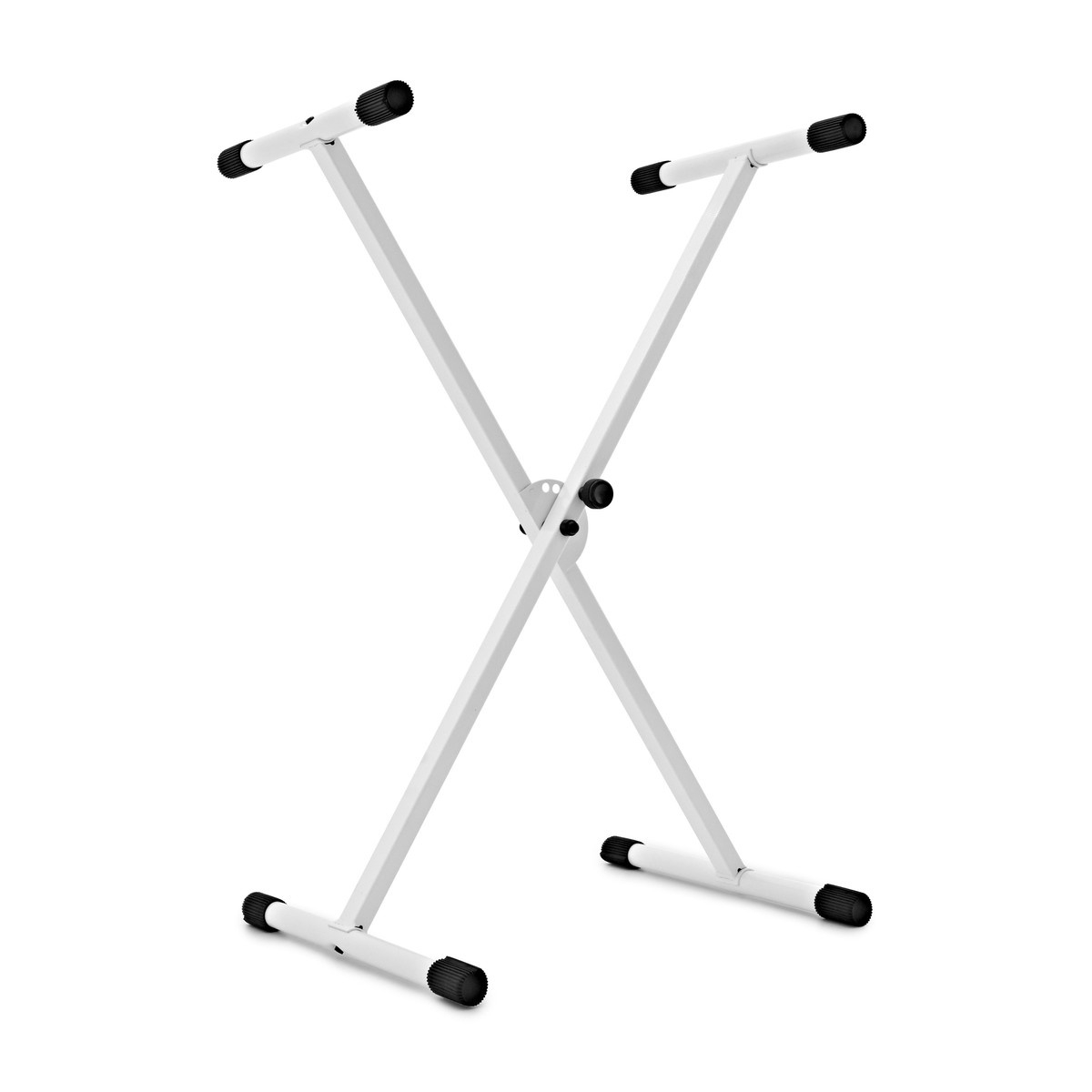
X Stands are among the most common solutions for keyboards. They are characterized by simple construction, foldability, and adjustable height.
They are especially suitable for home practice, music schools, rehearsal rooms, or occasional transport. When choosing, pay attention to the load-bearing capacity and the width of the load-bearing arms.
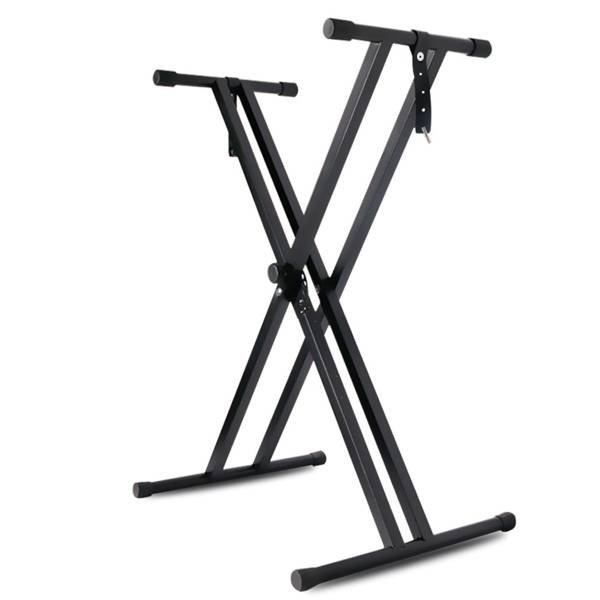
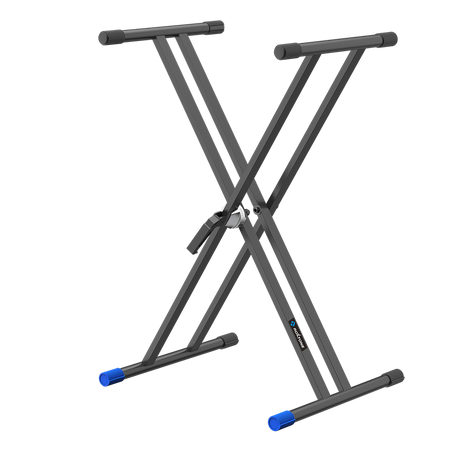
Double X Stands have reinforced construction and are generally more stable than single X stands. They can be suitable for heavier keyboards or for more frequent use.
If you have a larger or heavier keyboard instrument, it is worth paying attention to the structural strength and the maximum permissible load-bearing capacity.
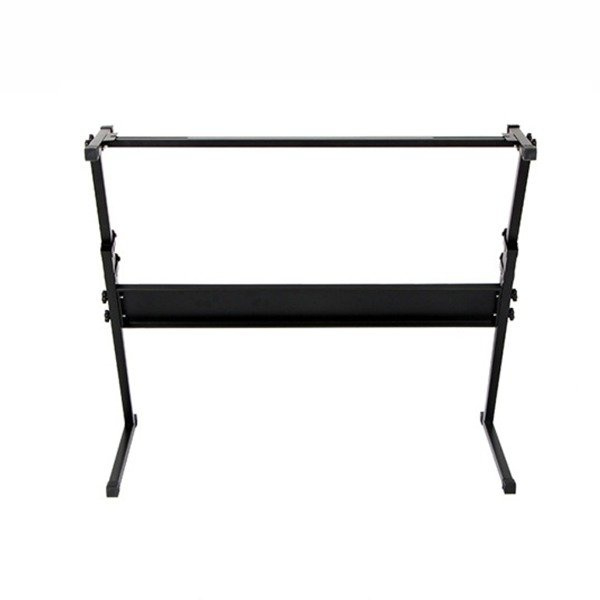
Z Stands offer a different construction with more legroom and often higher stability. They are practical for musicians who require a sturdy solution for regular home, studio, or stage play.
For digital pianos, you can use a universal stand or a stand designed for a specific model. Original furniture stands are usually adapted to the dimensions of a specific digital piano, providing a more stable home setup.
An universal stand is more practical if you want to frequently move the instrument or use it at various locations.
Before choosing, always check the weight of the keyboard or digital piano and the maximum load-bearing capacity of the stand. The stand should not be persistently loaded beyond the manufacturer's specified limit.
For heavier instruments, it is advisable to choose a stand with sufficient reserve capacity and a stable construction.
Adjustable height is crucial for maintaining a proper playing position. The keyboard should be positioned so that you do not have to unnecessarily raise your shoulders or bend your wrists while playing.
If more people are playing the keyboard, for example at home or in a music school, an adjustable stand is more practical than a model with a fixed height.
For children, it is important that the stand can be adjusted to an appropriate height. A very high stand can lead to incorrect hand and shoulder positioning.
Together with the stand, it is advisable to choose an adjustable-height bench or stool, so the playing position can be adjusted to the child's height.
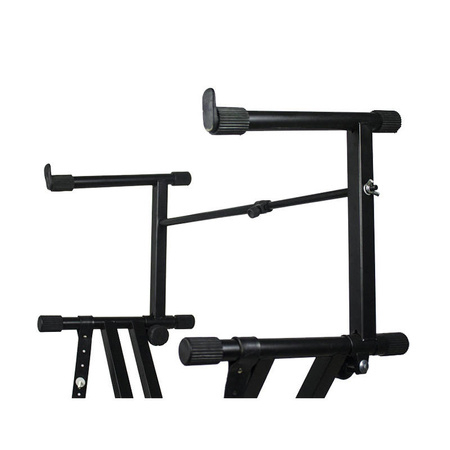
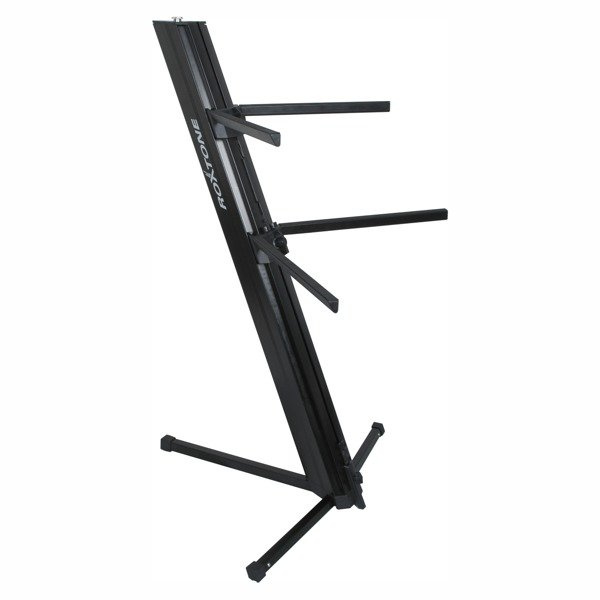
For concert use, stability, quick assembly, and easy portability are especially important. Musicians who use multiple keyboards can also benefit from multi-tier systems or stands that allow the addition of another holder.
A quality stand should stand firmly on the floor and should have non-slip elements on both the legs and the areas in contact with the instrument. These help prevent unwanted movement of the stand or the keyboard itself.
If you frequently transport the stand, a foldable construction significantly facilitates both transport and storage. Always check before use whether the mechanism is correctly secured and the stand is firmly deployed.
A standard adjustable X stand with a sufficient load-bearing capacity for your specific keyboard is typically a practical starting point. It's simple, foldable, and easy to adjust.
No. The decision is based on the dimensions, weight of the instrument, load-bearing capacity of the stand, and the width of the load-bearing arms.
A double X stand typically has a sturdier construction and may be more suitable for heavier instruments or more frequent use.
It can be if its load-bearing capacity and dimensions match the specific digital piano. For heavier models, a more robust stand may be more suitable.
Set the height in a way that you can play in a natural sitting or standing posture, with relaxed shoulders and wrists in an unforced position.
It refers to the maximum weight of the instrument that the stand is designed to safely carry according to the manufacturer. Do not exceed this value.
Not necessarily. The stability depends on the construction, quality of processing, correct adjustment, and the weight of the instrument.
Only if the stand is constructed for such use or it allows for the assembly of another tier. A conventional single-tier stand is not designed for this purpose.
It depends on the specific model. Universal stands often function as a support beneath the instrument, while some stands for digital pianos are directly attached to the instrument.

Ďakujem zo srdca za spoluprácu , veľmi ochotný personál , rýchle a precízne zabalené dodanie.
- 4. septembra 2026 Overený zákazník
Rýchle spracovanie mojej objednávky
- 1. septembra 2026 Overený zákazník
Všetko v poriadku
- 10. augusta 2026 Overený zákazník